| You Are Much Closer to Your Friends |
 Your friends are so great, it's hard not to be the closest to them. As for your family, your relationship with them is probably a bit strained. It's okay though. While you can't pick your family, you can pick your friends. And you've picked some amazing friends who count as family to you. |
Sunday, July 31, 2011


Saturday, July 30, 2011
| You Are 80% Tortured Genius |
 You are smart. Brilliant in fact. And while it's a blessing, it's also a curse. Your head is filled with everything - grand ideas, insufferable worries, and a good deal of angst. |
Friday, July 29, 2011
| Your Vocabulary Score: A |
 Congratulations on your multifarious vocabulary! You must be quite an erudite person. |
Thursday, July 28, 2011
| You Are Bold |
 You have an incredibly strong personality and sense of self. You know who you are and embrace it. You are stubborn and opinionated. You speak your mind, and you're reluctant to meet someone halfway when you know you're right. You are energetic to the point of being impatient. You don't like to wait for what you want. You enjoy a good challenge or competition. You like to put yourself to the test. |
Wednesday, July 27, 2011
| You Are the Moon |
 Some may find you to be a bit harsh, but if anything you are a realist. You are a loner and prefer to keep to yourself. You are shy, but you're also naturally introverted. Those who get to know you appreciate your practical, no-nonsense approach to life. You may not be warm and fuzzy, but you are extremely caring in your own way. |
Tuesday, July 26, 2011
| You Are Flares |
 You are a true free spirit, and you enjoy playing with fashion. Your look tends to be eclectic. You tend to be a bit rebellious. You're more likely to dress for yourself than dress for the occasion. You are both peaceful and jovial. There is a happy calm that surrounds everything you do. You are broad minded, well read, and well traveled. You are open to anything that comes your way. |
Monday, July 25, 2011
You Are a Black Leather Jacket |
 You are a simply happy person. You feel fortunate to have so much light and laughter in your life. You are sometimes unprepared, and you're fine with that. You prefer to remain open and flexible. You know how to have a good time. You have something to smile about every day. You are good at getting people to let loose. You are the fun one in your group. |
Sunday, July 24, 2011
You Are Big Black Boots! |
 You can be best described as: attitude You've got lots of it - and you love to give it A guy has to be pretty gusty to hit on you But if he's your type, you'll warm up... a little. |
Saturday, July 23, 2011
You Are Platform Sandals |
 Funky and urban You've got a cutting edge style that everyone envies A little bit downtown, a little bit euro, and whole lot of sexy! |
How to Kill a Car
By Tom Torbjornsen | Yahoo! Autos – 14 hours ago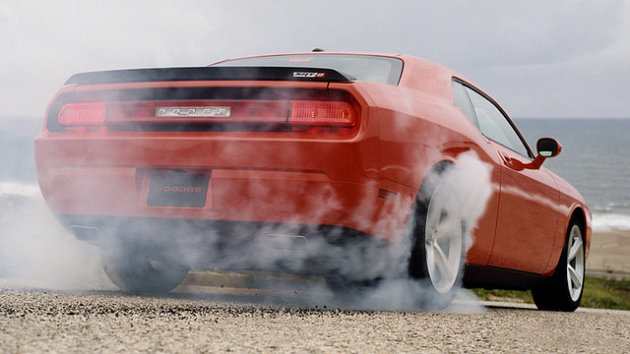
Dodge challenger1/flickr
What does it take to kill a car? Many of you can come up with ways of your own, but let’s look at some of the most common forms of abuse that cause vehicle failure.
NEGLECTING SCHEDULED MAINTENANCE
More cars find their way to the junkyard by neglecting basic scheduled maintenance than any other cause. This list includes such things as neglecting oil changes and transmission services, driving too long on the same set of sparkplugs, ignoring check engine lights and charging system or temperature gauges that indicate trouble, turning a deaf ear to brake squeals, belt squeals, clanking, banging, and clunking.
NEGLECTING SCHEDULED MAINTENANCE
More cars find their way to the junkyard by neglecting basic scheduled maintenance than any other cause. This list includes such things as neglecting oil changes and transmission services, driving too long on the same set of sparkplugs, ignoring check engine lights and charging system or temperature gauges that indicate trouble, turning a deaf ear to brake squeals, belt squeals, clanking, banging, and clunking.
Think about this: Airlines have aggressive maintenance checks on their planes based on how many hours they have been in the air. Ocean liners and submarines keep a full-time maintenance crew on hand at all times to attend to mechanical problems as they crop up. Race teams have a pit crew on hand during the race to ensure the vehicle continues to deliver peak performance safely throughout the event.
What makes those of us who drive a car every day think we are immune to mechanical breakdown? And what makes us think that we can drive our vehicles indefinitely without regular maintenance? Our cars need maintenance checks to ensure that they run safely and efficiently. There are an untold number of accidents that occur as a result of mechanical problems that were caused by neglect of basic maintenance issues. And there are many more cases of massive and unnecessary repair costs for the same reason.
What makes those of us who drive a car every day think we are immune to mechanical breakdown? And what makes us think that we can drive our vehicles indefinitely without regular maintenance? Our cars need maintenance checks to ensure that they run safely and efficiently. There are an untold number of accidents that occur as a result of mechanical problems that were caused by neglect of basic maintenance issues. And there are many more cases of massive and unnecessary repair costs for the same reason.
A lot of people think that if the car runs, why spend money on it? If there’s no obvious problem, wait until there is and then fix it. If you think like this, you are being pennywise and pound-foolish. In your lifetime you are spending far more money on cars than the guy who does what it takes to maintain a healthy car. Compare it to the physical health of your body. In the past, people used to go to a doctor only when they were sick. Today we know that preventative care has improved the quality of life as well as extended the length of life. And it costs less money! Insurance companies want to pay for yearly checkups because problems can be diagnosed early before they cost an arm and a leg to treat. Cars are no different. Follow the suggested maintenance schedule for your vehicle and you will get longevity, peak performance, and efficient operation out of your chariot.
OVERLOADING TOWING AND HAULING CAPACITY
Have you ever followed a car towing a small boat trailer that’s loaded with a very large boat? Picture it. A large boat is hanging over a trailer on all sides and towering over the tow vehicle; the trailer’s tires are flattened, and the vehicle’s front end is pointing upward. It’s a mess looking for a place to explode, and this is not an uncommon sight. Talk about a safety issue. Not only are the people in the tow vehicle at high risk, but so are the motorists who share the same roadway space.
Vehicles come from the factory with a specific towing capacity. Some vehicles come made with a towing package that is designed for safe towing. Check your owner’s manual or call your manufacturer’s customer service department to find out the towing capacity of your particular vehicle.
What happens when you pull a trailer that’s too heavy for your vehicle? Engine damage from overheating, undue stress to the frame, damage to the suspension and braking systems, and transmission damage from overheating.
OVERLOADING TOWING AND HAULING CAPACITY
Have you ever followed a car towing a small boat trailer that’s loaded with a very large boat? Picture it. A large boat is hanging over a trailer on all sides and towering over the tow vehicle; the trailer’s tires are flattened, and the vehicle’s front end is pointing upward. It’s a mess looking for a place to explode, and this is not an uncommon sight. Talk about a safety issue. Not only are the people in the tow vehicle at high risk, but so are the motorists who share the same roadway space.
Vehicles come from the factory with a specific towing capacity. Some vehicles come made with a towing package that is designed for safe towing. Check your owner’s manual or call your manufacturer’s customer service department to find out the towing capacity of your particular vehicle.
What happens when you pull a trailer that’s too heavy for your vehicle? Engine damage from overheating, undue stress to the frame, damage to the suspension and braking systems, and transmission damage from overheating.
Overheating
Vehicles designed for heavy towing that have a towing package from the factory come with a high coolant capacity radiator and sometimes a heavier water pump. When hauling a heavy load on a trailer with a vehicle that is not designed to haul such a load, the engine heats up far beyond the ability of the radiator to cool it down. The result is overheating, blown head gaskets, and cracked or warped cylinder heads. This is not to say that you should never tow a trailer with your vehicle, just find out what the towing capacity is and do not exceed it. On vehicles that tow heavy loads regularly, it’s a good idea to add an auxiliary engine oil cooler to ensure the engine oil in the crankcase is thoroughly cooled, because intense heat causes the oil to break down and lose viscosity.
Undue Stress to the Frame
Vehicles with high towing capacities generally have strong frames that allow for hanging the additional weight of a trailer in them. When hauling a trailer that is too heavy with a vehicle not designed to haul such weight, the frame buckles and damage to the structural integrity of the vehicle is incurred.
Suspension Damage
The suspension is designed to handle the weight of the vehicle plus the specified maximum trailer-towing weight. That’s it. Overload the vehicle and suspension problems occur. Leaf and coil springs or torsion bars are overtaxed and either break or wear out prematurely. U-bolts and shackles that hold leaf-spring-packs together break, coil springs crack or snap in two, and torsion bars break free from their securing brackets in the vehicle’s frame.
Brake Damage
Brakes are overtaxed when a vehicle that is loaded beyond capacity has to stop. Most small trailers do not have brakes of their own, so the brake system of the towing vehicle bears the burden of the entire load. The additional stress on the brakes causes the friction material to overheat and harden or crystallize, rendering it ineffective and unable to stop the vehicle. This condition causes “brake fade.” When you press down on the brake pedal, no friction material wear occurs because the crystallized friction material is too hard to wear away when it comes in contact with the rotors or drums. The brake shoes or pads just ineffectively slide against the rotor or drum surface like locomotive brakes (steel on steel) and make lots of noise, but there’s no stopping power. Overheating the braking system also increases the temperature of the brake fluid to the point where it cooks the rubber seals and the entire system is compromised.
Transmission Overheating and Damage
An excessive load causes the transmission to overheat, which causes the transmission fluid to reach temperatures that compromise the soft internal parts such as rubber seals and clutches. The heat hardens the rubber seals, causing loss of internal hydraulic pressure. In addition, the glue that secures the clutch friction material to the steel backings hardens and clutch strength is compromised. If you’re going to haul a trailer, install an auxiliary transmission oil cooler.
Undue Stress to the Frame
Vehicles with high towing capacities generally have strong frames that allow for hanging the additional weight of a trailer in them. When hauling a trailer that is too heavy with a vehicle not designed to haul such weight, the frame buckles and damage to the structural integrity of the vehicle is incurred.
Suspension Damage
The suspension is designed to handle the weight of the vehicle plus the specified maximum trailer-towing weight. That’s it. Overload the vehicle and suspension problems occur. Leaf and coil springs or torsion bars are overtaxed and either break or wear out prematurely. U-bolts and shackles that hold leaf-spring-packs together break, coil springs crack or snap in two, and torsion bars break free from their securing brackets in the vehicle’s frame.
Brake Damage
Brakes are overtaxed when a vehicle that is loaded beyond capacity has to stop. Most small trailers do not have brakes of their own, so the brake system of the towing vehicle bears the burden of the entire load. The additional stress on the brakes causes the friction material to overheat and harden or crystallize, rendering it ineffective and unable to stop the vehicle. This condition causes “brake fade.” When you press down on the brake pedal, no friction material wear occurs because the crystallized friction material is too hard to wear away when it comes in contact with the rotors or drums. The brake shoes or pads just ineffectively slide against the rotor or drum surface like locomotive brakes (steel on steel) and make lots of noise, but there’s no stopping power. Overheating the braking system also increases the temperature of the brake fluid to the point where it cooks the rubber seals and the entire system is compromised.
Transmission Overheating and Damage
An excessive load causes the transmission to overheat, which causes the transmission fluid to reach temperatures that compromise the soft internal parts such as rubber seals and clutches. The heat hardens the rubber seals, causing loss of internal hydraulic pressure. In addition, the glue that secures the clutch friction material to the steel backings hardens and clutch strength is compromised. If you’re going to haul a trailer, install an auxiliary transmission oil cooler.
THE NEUTRAL DROP
A Neutral Drop is when you rev the engine high in neutral and, at the peak of revving, you drop the transmission into low gear. In the case of a car equipped with a manual transmission, you dump the clutch in first gear after revving the engine high. This action causes the tires to squeal as you speed off the line. The problem with this practice is that it puts excessive stress on the drivetrain components. Driveshafts break or bend, universal or CV joints snap, differentials are damaged, axles twist and break or strip out, transmissions break internally, and clutches burn out. In short, it’s a high price to pay just to experience a little tire squealing. Not good.
INSTALLING A PLOW ON A VEHICLE THAT CAN’T HANDLE ONE
This kind of vehicle abuse often occurs in parts of the country that get a lot of snow. In recent years plow makers have come out with what they call “personal plows” for regular-duty vehicles such as small or mid-sized SUVs. Usually these plows are made of lightweight materials such as Plexiglas, aluminum, or a synthetic material that the maker claims will not overtax the vehicle. So what’s the problem? Although these types of plows are not too heavy for the vehicle, they are intended for light use. The problem is that people tend to overwork them.
Often a driver will plow so hard into a snow bank that the air bag deploys. In addition, although the driver is not aware of it, the vehicle also sustains frame, suspension, steering linkage, and some body damage that can be attributed directly to the plow installation.
In this scenario, let’s say this guy gets away with using the personal plow for a couple of years. During year three he notices a high-pitched whine coming from the transmission; then it quits altogether. He takes it to the shop. The diagnosis? The transmission is burned up due to excessive plow use. What happened? The transmission in his light-duty truck was not intended to push several hundred pounds of snow and ice around. It gave up the ghost after just three years of plow work. The damage was a result of the hard impacts of the plow into snow banks, ice, and other obstructions hiding under the snow. Had he installed the plow in a vehicle capable of handling it, there would have been no damage.
ROCKING THE VEHICLE OUT OF SNOW OR MUD
Ever get stuck in snow or mud? Rather than calling a tow truck, what’s the first thing we do? We rock the vehicle back and forth, switching from forward to reverse while gunning the engine. This action often causes the vehicle to gain enough momentum to get the vehicle out of the rut. It often works, but at what expense? The stress on the transmission and drivetrain can cause internal hard parts (case hardened gears and sprockets) to break under the pressure. CV joints, universal joints, and splined parts such as axles can twist and break apart. Save yourself some money -- dig out or get towed.
DRIVING WITH THE TEMPERATURE GAUGE ON HOT OR THE LIGHT ILLUMINATED
 You’re driving on a country road out in the middle of nowhere when you notice that your temperature gauge is buried in the “hot” zone. Rather than stop and call a tow truck, you keep driving, hoping you can make it to a repair shop. The engine overheats, coolant spews out of the overflow tank, and the engine gets so hot it stalls. You have to call a tow truck anyway. The shop tells you your engine’s got a blown head gasket and cracked cylinder head. The cause? A $12 thermostat. The repair would have cost you $12 plus the cost of installation and coolant and the cost of a tow job (unless you have AAA or the equivalent). Instead you end up with an $800 repair bill because you were too stubborn to call a tow truck. Many a good vehicle has been undone because of this mistake.
DRIVING WITH LOW OR NO OIL IN THE ENGINE
While driving at highway speed the oil light comes on. You either don’t see it or choose to ignore it. Sometimes an engine noise (usually a “knock”) can be heard when the light comes on. You hear the knock but choose to turn up the radio (don’t laugh; people actually do this). All of a sudden the engine starts to lose power and it eventually stalls, leaving you stranded on the roadside. You call a tow truck and the vehicle is towed to a repair shop. The diagnosis: The engine has seized because there was no oil in the system and you have to replace it.
How can this scenario be avoided? Stop at the first sign of low oil, whether it’s the low oil pressure gauge, a lit oil light, or a knocking sound. Often major damage can be averted if the engine is shut off in time. Sadly most people choose to ignore the warning signs.
IGNORING AUTOMATIC TRANSMISSION WARNING SIGNS
The warning signs that something is wrong with your automatic transmission are quite distinct. Whining, dropping out of gear, and banging into gear all fall under this category. If you observe any of these symptoms, stop driving and check the fluid levels. Driving an automatic transmission on low fluid results in greater friction and more heat. The longer the transmission is driven in this condition, the more likely irreversible damage will occur. Remember, heat hardens the rubber seals and crystallizes the clutch glue, compromising the system. When you first notice any of these symptoms, check the fluid and proceed with diagnostics before driving any farther to avoid costly repairs and down time.
OVERSHOOTING A TURN AND HITTING A CURB IN THE SNOW
When you drive too fast on snow-covered roads, your vehicle slides rather than tracks through the snow. This action can cause frame, suspension, and steering damage if it occurs while trying to make a turn. For example, let’s say you are approaching an intersection and realize at the last minute that you have to make a left-hand turn. Because your vehicle is going too fast, it slides as it turns and slams into the curb on the right side of the cross street. Overshooting a curb in the snow is a common occurrence, costing anywhere from hundreds to even thousands of dollars in repairs.
As you can see, there’s a lot of vehicle abuse that can be avoided. Use common sense, know your car, observe changes in sounds, vibrations, warning lights, and other detectable variations, and don’t ignore possible problems or put off getting them diagnosed. Your car is a major item on your family’s budget. You can’t control the price of cars, or the cost of car insurance, or the cost of gas, but you can control how much you spend to maintain your car, and how long it lasts, and how safe your family is when they ride in it. Take charge in these areas where you have control and you’ll always have a reliable and safe vehicle that performs well and lasts long enough to make you feel like you got your money’s worth.
ADDITIONAL DRIVING TECHNIQUES TO AVOID TO MAKE YOUR CAR LAST FOREVER
Feathering the Clutch
Have you ever seen someone in the car next to you on a hill, revving the engine and causing the car to lunge forward then hit the brakes, only to watch the car creep backward and the whole process starts again? I guarantee you that this driver is “feathering the clutch.” What they’re doing is equalizing the clutch halfway engaged and gunning the engine in an effort to make the car stay put on a hill. This practice results in a failed clutch in short order every time. By partially applying the clutch and racing the engine, you burn clutch disc material off the disc, rendering it useless and costing you hundreds or over a thousand dollars in repairs, depending on the damage done. It’s best to learn how to start a stopped car on a hill with a clutch rather than this idiotic move.
Power Braking
When power braking, one foot is held on the brake while the other foot floors the gas pedal. When the light turns green, the driver releases the brake and the car races off at a high rate of acceleration. The problem with this practice is that engine and transmission mounts are taxed and over time break. If there already is a broken engine mount, the engine could lift up and chock the throttle linkage open, resulting in uncontrolled acceleration. In addition, internal automatic transmission parts can fracture and break, brakes wear out when the tires break loose against the applied brakes, and transmission and oil cooler lines become stressed and break, causing a massive fluid leak and potentially doing internal engine or transmission damage. And these are just a few problems that could crop up.
Drafting
Some people think they’re NASCAR’s Tony Stewart on the roadways, drafting semis and other vehicles while driving on the highways. Not only is this dangerous if the vehicle in front of you has to make a quick stop, it’s also expensive in terms of paint work. Think about it: All the stones and projectiles on the roadway rolled over by the leading vehicle gets kicked up onto your vehicle’s body, paint, and windshield. Think about the paint and body damage, not to mention glass damage you are setting yourself up to experience. Slow down, Tony. It’s safer and cheaper…
Pulling a Fishtail
The other day I was waiting at a stoplight and heard the most annoying noise you can imagine. This guy was driving a small pickup truck, and he gunned it as he turned the corner. It was on a wet road surface so the rear wheels spun and the rear end of the truck fishtailed with him smiling behind the wheel as he lumbered down the highway (sped off would not be an accurate statement because the truck had a small four-cylinder engine in it). What happened if the truck spun out in that crowded intersection? What kind of damage would he have done to his truck and the other cars? If there was snow on the ground and he had hit a curb that was hiding under that snow, he would have pulverized the suspension and drivetrain (not to mention the wheel and axle damage he could have sustained). I have seen vehicular undercarriages literallydestroyed from this type of abuse. Bad practice, stay away from it.
Well, that does it from me. Till next time, keep rollin’!

A Neutral Drop is when you rev the engine high in neutral and, at the peak of revving, you drop the transmission into low gear. In the case of a car equipped with a manual transmission, you dump the clutch in first gear after revving the engine high. This action causes the tires to squeal as you speed off the line. The problem with this practice is that it puts excessive stress on the drivetrain components. Driveshafts break or bend, universal or CV joints snap, differentials are damaged, axles twist and break or strip out, transmissions break internally, and clutches burn out. In short, it’s a high price to pay just to experience a little tire squealing. Not good.
INSTALLING A PLOW ON A VEHICLE THAT CAN’T HANDLE ONE
This kind of vehicle abuse often occurs in parts of the country that get a lot of snow. In recent years plow makers have come out with what they call “personal plows” for regular-duty vehicles such as small or mid-sized SUVs. Usually these plows are made of lightweight materials such as Plexiglas, aluminum, or a synthetic material that the maker claims will not overtax the vehicle. So what’s the problem? Although these types of plows are not too heavy for the vehicle, they are intended for light use. The problem is that people tend to overwork them.
Often a driver will plow so hard into a snow bank that the air bag deploys. In addition, although the driver is not aware of it, the vehicle also sustains frame, suspension, steering linkage, and some body damage that can be attributed directly to the plow installation.
In this scenario, let’s say this guy gets away with using the personal plow for a couple of years. During year three he notices a high-pitched whine coming from the transmission; then it quits altogether. He takes it to the shop. The diagnosis? The transmission is burned up due to excessive plow use. What happened? The transmission in his light-duty truck was not intended to push several hundred pounds of snow and ice around. It gave up the ghost after just three years of plow work. The damage was a result of the hard impacts of the plow into snow banks, ice, and other obstructions hiding under the snow. Had he installed the plow in a vehicle capable of handling it, there would have been no damage.
ROCKING THE VEHICLE OUT OF SNOW OR MUD
Ever get stuck in snow or mud? Rather than calling a tow truck, what’s the first thing we do? We rock the vehicle back and forth, switching from forward to reverse while gunning the engine. This action often causes the vehicle to gain enough momentum to get the vehicle out of the rut. It often works, but at what expense? The stress on the transmission and drivetrain can cause internal hard parts (case hardened gears and sprockets) to break under the pressure. CV joints, universal joints, and splined parts such as axles can twist and break apart. Save yourself some money -- dig out or get towed.
DRIVING WITH THE TEMPERATURE GAUGE ON HOT OR THE LIGHT ILLUMINATED
DRIVING WITH LOW OR NO OIL IN THE ENGINE
While driving at highway speed the oil light comes on. You either don’t see it or choose to ignore it. Sometimes an engine noise (usually a “knock”) can be heard when the light comes on. You hear the knock but choose to turn up the radio (don’t laugh; people actually do this). All of a sudden the engine starts to lose power and it eventually stalls, leaving you stranded on the roadside. You call a tow truck and the vehicle is towed to a repair shop. The diagnosis: The engine has seized because there was no oil in the system and you have to replace it.
How can this scenario be avoided? Stop at the first sign of low oil, whether it’s the low oil pressure gauge, a lit oil light, or a knocking sound. Often major damage can be averted if the engine is shut off in time. Sadly most people choose to ignore the warning signs.
IGNORING AUTOMATIC TRANSMISSION WARNING SIGNS
The warning signs that something is wrong with your automatic transmission are quite distinct. Whining, dropping out of gear, and banging into gear all fall under this category. If you observe any of these symptoms, stop driving and check the fluid levels. Driving an automatic transmission on low fluid results in greater friction and more heat. The longer the transmission is driven in this condition, the more likely irreversible damage will occur. Remember, heat hardens the rubber seals and crystallizes the clutch glue, compromising the system. When you first notice any of these symptoms, check the fluid and proceed with diagnostics before driving any farther to avoid costly repairs and down time.
OVERSHOOTING A TURN AND HITTING A CURB IN THE SNOW
When you drive too fast on snow-covered roads, your vehicle slides rather than tracks through the snow. This action can cause frame, suspension, and steering damage if it occurs while trying to make a turn. For example, let’s say you are approaching an intersection and realize at the last minute that you have to make a left-hand turn. Because your vehicle is going too fast, it slides as it turns and slams into the curb on the right side of the cross street. Overshooting a curb in the snow is a common occurrence, costing anywhere from hundreds to even thousands of dollars in repairs.
As you can see, there’s a lot of vehicle abuse that can be avoided. Use common sense, know your car, observe changes in sounds, vibrations, warning lights, and other detectable variations, and don’t ignore possible problems or put off getting them diagnosed. Your car is a major item on your family’s budget. You can’t control the price of cars, or the cost of car insurance, or the cost of gas, but you can control how much you spend to maintain your car, and how long it lasts, and how safe your family is when they ride in it. Take charge in these areas where you have control and you’ll always have a reliable and safe vehicle that performs well and lasts long enough to make you feel like you got your money’s worth.
ADDITIONAL DRIVING TECHNIQUES TO AVOID TO MAKE YOUR CAR LAST FOREVER
Feathering the Clutch
Have you ever seen someone in the car next to you on a hill, revving the engine and causing the car to lunge forward then hit the brakes, only to watch the car creep backward and the whole process starts again? I guarantee you that this driver is “feathering the clutch.” What they’re doing is equalizing the clutch halfway engaged and gunning the engine in an effort to make the car stay put on a hill. This practice results in a failed clutch in short order every time. By partially applying the clutch and racing the engine, you burn clutch disc material off the disc, rendering it useless and costing you hundreds or over a thousand dollars in repairs, depending on the damage done. It’s best to learn how to start a stopped car on a hill with a clutch rather than this idiotic move.
Power Braking
When power braking, one foot is held on the brake while the other foot floors the gas pedal. When the light turns green, the driver releases the brake and the car races off at a high rate of acceleration. The problem with this practice is that engine and transmission mounts are taxed and over time break. If there already is a broken engine mount, the engine could lift up and chock the throttle linkage open, resulting in uncontrolled acceleration. In addition, internal automatic transmission parts can fracture and break, brakes wear out when the tires break loose against the applied brakes, and transmission and oil cooler lines become stressed and break, causing a massive fluid leak and potentially doing internal engine or transmission damage. And these are just a few problems that could crop up.
Drafting
Some people think they’re NASCAR’s Tony Stewart on the roadways, drafting semis and other vehicles while driving on the highways. Not only is this dangerous if the vehicle in front of you has to make a quick stop, it’s also expensive in terms of paint work. Think about it: All the stones and projectiles on the roadway rolled over by the leading vehicle gets kicked up onto your vehicle’s body, paint, and windshield. Think about the paint and body damage, not to mention glass damage you are setting yourself up to experience. Slow down, Tony. It’s safer and cheaper…
Pulling a Fishtail
The other day I was waiting at a stoplight and heard the most annoying noise you can imagine. This guy was driving a small pickup truck, and he gunned it as he turned the corner. It was on a wet road surface so the rear wheels spun and the rear end of the truck fishtailed with him smiling behind the wheel as he lumbered down the highway (sped off would not be an accurate statement because the truck had a small four-cylinder engine in it). What happened if the truck spun out in that crowded intersection? What kind of damage would he have done to his truck and the other cars? If there was snow on the ground and he had hit a curb that was hiding under that snow, he would have pulverized the suspension and drivetrain (not to mention the wheel and axle damage he could have sustained). I have seen vehicular undercarriages literallydestroyed from this type of abuse. Bad practice, stay away from it.
Well, that does it from me. Till next time, keep rollin’!
Friday, July 22, 2011
Guys Like That You're Sensitive |
 And not in that "cry at a drop of a hat" sort of way You just get most guys - even if you're not trying to Guys find it is easy to confide in you and tell you their secrets No wonder you tend to get close quickly in relationships! |
Do's & Don'ts For Fabulous Summer Feet

Almost 50 percent of women ages 18-49 say they received a professional pedicure before their 25th birthday, according to the American Podiatric Medical Association (APMA).
The APMA developed a tip sheet for pedicure do’s and don’ts and, since summer is the height of pedicure season, it’s a timely reminder for those who do get pedicures.
Pedicure medical alert: If you have diabetes or poor circulation in your feet, consult a podiatrist so they can recommend a customized pedicure that both you and your salon can follow for optimal foot health.
Pedicure Do’s:
- DO schedule your pedicure first thing in the morning. Salon foot baths are typically cleanest earlier in the day. If you’re not a morning person, make sure that the salon filters and cleans the foot bath between clients.
- DO bring your own pedicure utensils to the salon. Bacteria and fungus can move easily from one person to the next if the salon doesn’t use proper sterilization techniques.
- When eliminating thick, dead skin build-up, also known as calluses, on the heel, ball and sides of the feet, DO use a pumice stone, foot file or exfoliating scrub. Soak feet in warm water for at least five minutes then use the stone, scrub or foot file to gently smooth calluses and other rough patches.
- When trimming nails, DO use a toenail clipper with a straight edge to ensure your toenail is cut straight across. Other tools like manicure scissors or fingernail clippers increase the risk of ingrown toenails because of their small, curved shape. See a podiatrist if you have a tendency to develop ingrown toenails.
- To smooth nail edges, DO use an emery board. File lightly in one direction without using too much pressure, being sure not to scrape the nail’s surface.
- DO gently run a wooden or rubber manicure stick under your nails to keep them clean. This helps remove the dirt and build-up you may or may not be able to see.
- DO maintain the proper moisture balance of your feet’s skin by applying emollient-enriched moisturizer to keep soles soft.
- DO use a rubber cuticle pusher or manicure stick to gently push back cuticles.
- If toenails are healthy, DO use nail polish to paint toenails. Make sure to remove polish regularly using non-acetone nail polish remover.
Pedicure Don’ts:
- DON’T shave your legs before receiving a pedicure. Freshly shaven legs or small cuts on your legs may allow bacteria to enter.
- If you are receiving a pedicure and manicure, DON’T use the same tools for both services as bacteria and fungus can transfer between fingers and toes.
- DON’T allow technicians to use a foot razor to remove dead skin. Using a razor can result in permanent damage if used incorrectly and can easily cause infection if too much skin is removed.
- DON’T round the edges of your toenails. This type of shape increases the chances that painful ingrown toenails will develop.
- Emery boards are extremely porous and can trap germs that spread. Since they can’t be sterilized, DON’T share nail files with friends and be sure to bring your own to the salon, unless you are sure that the salon replaces them with each customer.
- DON’T use any sharp tools to clean under nails. Using anything sharp makes it easy to puncture the skin, leaving it vulnerable to infection.
- DON’T leave any moisture between toes. Anything left behind can promote the development of athlete’s foot or a fungal infection.
- Because cuticles serve as a protective barrier against bacteria, DON’T ever cut them. Cutting cuticles increases the risk of infection. Also, avoid incessantly pushing back cuticles, as doing so can make them thicker.
- If you suffer from thick and discolored toenails, which could be a sign of a fungal infection, DON’T apply nail polish to cover up the problem. Nail polish locks out moisture and doesn’t allow the nail bed to “breathe.” Once you fix the underlying issue, then it is safe to paint nails. If the problem persists be sure to visit your podiatrist.
Source: American Podiatric Medical Association
Thursday, July 21, 2011
You Are Macaroni and Cheese |
 Compared to most people, you are quite playful. You are a big kid at heart. It doesn't take much to make you happy. You live for simple, happy moments. You are very content. You don't try to make life overly complicated. You remain thankful for whatever you have. Even if it isn't much, you make the best of things. |
Wednesday, July 20, 2011
Your Birthstone Should Be the Opal |
 Opal represents hope and optimism - two concepts you completely embrace in your life. Like opals, you are unique and exquisite. You are one of a kind, and that makes you gorgeous. You love being in nature, and you feel like you have strong connection to the earth... especially water. You are an open and honest communicator. You can connect easily to others with your words. |
| You Should Play Classical Cello |
 You are orderly and systematic. You like to have everything in its place. You are bored by routine. You need some whimsy in your life to stay happy. You've figured out what works for you in life, and you just go with that. You are well grounded, but you also seek freedom. You need independence in order to grow and thrive. |
Tuesday, July 19, 2011
Your Feet Say You're Slightly Stubborn |
 You are pretty average in your expressiveness. You can express yourself well, but you don't always want to. You are a very passionate person. You are highly charged and easily inspired. You are an assertive person at times. You'll pull out all the stops to get what you want, if it's worth it. You take a while to fall in love, but once you do, you stay pretty attached to your partner. You are not easily frightened, but you have a few strong phobias. You are very practical and down to earth. You're more concerned with action than thoughts. You are a fairly hard worker, but you are also a little spoiled. You like indulge yourself every now and then. You are not easily influenced by other people. You hold your ground and are true to your beliefs. |
What Makes a Face Beautiful?

Thinkstock
While you may spend hours scouring beauty counters searching for miracle concoctions to help you look more attractive, what others inherently find beautiful about your face may actually be based more on proportions than potions.
What are some of these markers of beauty? And more importantly, why do we find them to be beautiful?
“All of these questions are linked to evolution,” says Dr. Pamela Pallett, a researcher at Dartmouth University. “You want to have a healthy mate because that person likely has good genetics, and the faces we perceive as beautiful can signify good genetics.”
So, to some degree, we are programmed to be more attracted to certain faces over others. Sexual dimorphism, a fancy term for sex-specific traits, is one of the major factors in determining what we find beautiful. The more feminine a woman’s features are, the more attractive she’s perceived to be.
“For women, things like large eyes, a small nose and fuller lips are generally found to be more attractive since they are considered to enhance facial femininity,” says Dr. Viren Swami, a Reader in Psychology at the University of Westminster, co-author of “The Psychology of Physical Attraction,” and YouBeauty Attraction Expert. One study zeroes in further and notes that a bigger forehead and smaller-than-average chin and nose are found to be more desirable in a woman.
The reasoning? Researchers believe that we’ve evolved to consider female-specific traits as markers of a high estrogen-to-testosterone ratio. This implies high fertility—in the end, it’s all about making healthy babies.
But just because you don’t look like Megan Fox doesn’t mean you’re out of luck. It’s important to note that it’s less about your specific features than it is about the overall face, says Dr. Swami. In other words, as long as your features collectively feminize your face (even if you have a larger nose or thinner lips, for instance), you’re still considered pretty. “If high cheekbones contribute to greater femininity, then the total look would be perceived to be attractive,” he explains. “Not necessarily just the high cheekbones on their own.”
While we’re talking cheeks, you’d be surprised to know that not all model-skinny or angular faces are considered ideal. A St. Andrews University study shows that facial adiposity, or the perception of weight in the face, was actually rated as more attractive to men. From an evolutionary standpoint, fuller faces indicate agreeable cardiovascular health and immunity to other infections. Good health equals healthy babies, right? At least that may have been our ancestors’ (unconscious) reasoning.
Symmetry and average-ness are also equally important when it comes to perceptions of beauty (yes, believe it or not, being average is cool). Both appear to indicate high variations in individual proteins, which lead to fewer birth defects in offspring.
“Symmetry works because the idea is that if you have a history of poor developmental stability—for example, a major illness or a nutrition deficiency early on—then you tend to have asymmetrical features,” Dr. Swami explains. So evolutionary psychologists believe humans have “evolved to find healthy facial features attractive, and symmetrical facial features are a good indication of health.”
Another reason you might be found attractive is because you’re familiar. In a study at Brandeis University, there was a higher rate of agreement among close friends, siblings and spouses on what they considered attractive than among strangers, suggesting that attractiveness has a strong social component, too.
Interestingly enough, Dr. Swami repeatedly found in his research an idea he refers to as the “love-is-blind bias”: “People who have already formed romantic relationships idealize their partner’s facial features, so they actually perceive them to be more physically attractive than other people would,” he says. But once you break up, the spell is over. You will soon see what others do, a more unbiased version of your ex. Those bushy eyebrows you once found so endearing? Yeah—not so much anymore.
A luminous, unblemished complexion is another factor in attractiveness—so don’t ditch your facialist just yet. There are mainly two reasons for that: Flawless skin indicates good health and youth. Smooth and relatively hairless skin indicates low levels of androgens and high estrogen. Both indicate fertility. What’s more, skin free of acne and other dermatological issues is perceived to mean healthy genes (hence, greater chances of producing healthy—you guessed it—babies).
So we come to the magical powers of makeup. “Foundation smoothes the skin, making it appear healthier and younger,” says Dr. Pallett. “Eye makeup and lipstick can also accentuate your natural femininity.” The darker and more contrasting your lips are from the surrounding skin, the more attractive. The reason? It’s associated with agreeable respiratory health, better oxygen levels—even sexual arousal. Looks like pin-up models with their bright red lipstick had the right idea.
So if it’s all about evolution, why can’t everyone just agree on who’s beautiful and who’s not? When you talk about individuals, it gets a little more complicated. Evolution explains why we find certain attributes attractive—to a degree. Factors like voice, facial expression, body language and personality also enhance one’s appeal, meaning physical features only take you so far before your inner beauty shines through.
- by Shyema Azam
Monday, July 18, 2011
Your Independence Level: High |
 You are extremely self reliant and autonomous. You are definitely into doing your own thing. But you also wouldn't turn down help if you needed it. You follow your own path, but you don't do so blindly. |
Sunday, July 17, 2011
You Are Analytical |
 You are both clever and practical. You strike the perfect balance between two extremes. You spend time with your head in the clouds, but your feet are still firmly planted on the ground. You tend to be a bit reserved, but those who know you know how much you care. You prefer your own company, but you're always willing to make room in your life for a kindred spirit. |
Saturday, July 16, 2011
Your Winter Sense is Sight |
 You are a very visual person, and some of your strongest memories are around things you've seen in your life. You simply like the way winter looks. This season may seem dead to most people, but it's very alive to you. You enjoy all the sites of winter - from starry winter nights to dancing holiday lights. You think this is the most beautiful time of the year. Snow makes everything a little more magical. |
Friday, July 15, 2011
Forgive Me
by Evanescence
 |
I don't know what I said
But I didn't mean to hurt you
I heard the words come out
I felt that I would die
It hurts so much to hurt you
Then you look at me
You're not shouting anymore
You're silently broken
I'd give anything now
To kill those words for you
Each time I say something I regret
I cry, I don't want to lose you
But somehow I know that you will never leave me
Cause you were made for me
Somehow I'll make you see
How happy you make me
I can't live this life
Without you by my side
I need you to survive
So stay with me
You look in my eyes and I'm screaming inside
That I'm sorry
And you forgive me again
You're my one true friend
And I never meant to hurt you
~~~~~~~~~~~~~~~~~~~~~~~~~~~~~~~~
This song fit my mood, and works with the situation.
Please forgive my thoughtless attitude and my rudeness.
I hope you have a better day.
Thursday, July 14, 2011
You Are an Astrologer |
 You tend to be a fanciful, spiritual person with many interesting theories. You are always trying to figure out how all the pieces of the world are connected. You have a knack for predicting the future and reading people. In modern times, you would make a good self help guru or a director of a non profit. |
Wednesday, July 13, 2011
You Are Jackie Kennedy Onassis |
 You feel at ease around others. You are a very socially oriented person. You have great people skills. You can find common ground with others well. You are stylish, charming, and alluring. You always have a part of yourself that is a mystery. Many people identify with you, but they're not exactly sure why. You just seem to have universal appeal. |
Some of My Favorite Scents...
 |
| Trésor by Lancôme |
It is classified as a sharp, oriental, floral fragrance. This feminine scent possesses a blend of lilac and apricot, with lower notes with amber and musk. It is recommended for daytime wear.
 |
| Insolence by Guerlain |
There is a delicate and soft violet waiting for you in the top notes, followed by red-fruits cocktail with raspberry domination. The heart is floral-sweet, composed of violet, rose, and orange blossom. At the end, sweet raisins and balsams together have joined iris and Tonka bean to round the composition. The creators of Insolence are Maurice Roucel i Sylvaine Delacourte, and the half-sphere bottle with the rose-like shaped stopper was created by Serge Mansau. The perfume was launched in 2006.
 |
| Red by Giorgio Beverly Hills |
Red by Giorgio Beverly Hills is a Oriental Floral fragrance for women. Red was launched in 1989. The nose behind this fragrance is Bob Aliano. Top notes are bergamot, osmanthus, ylang-ylang, orange blossom, peach, black currant, hyacinth and aldehydes; middle notes are carnation, rose, jasmine, rosemary, gardenia, tuberose, iris, lily-of-the-valley and litchi; base notes are patchouli, oakmoss, amber, cedar, sandalwood, vetiver, tonka bean, vanilla, myrhh and olibanum.
 |
| Cool Waters by Davidoff |
Ten years after the successful launch of Cool Water for men, the women's version was finally released. The scent is very calm with aquatic notes that remind us of ocean breeze and cool sea-water, fruits and woods. Top notes are luscious, cool and aquatic with Citrus, Honeydew Melon, Quince, Pineapple, Lotus and Lily. Heart notes are gentle flowers; May Rose, Jasmine and Muguet. Base notes are Musk, Vanilla, Peach, Sandalwood, Orris and Vetiver. Cool Water was created by Pierre Bourdon in 1996.
 |
| Black Amethyst by Bath & Body Works |
A new fragrant saga by the house of Bath & Body Works is dedicated to a gem, black amethyst and presented through the fragrant composition of the new perfume Black Amethyst which belongs to the Signature collection. It was announced as the sexiest edition so far, made of a mixture of sensual flowers, exotic sandalwood and intoxicating spices. Black Amethyst was launched in 2008.
Tuesday, July 12, 2011

Monday, July 11, 2011
| You Are Occasionally a Narcissist |
 While you have healthy self esteem, you're really not that full of yourself. Compared to most people, you're quite humble! Though occasionally, you can't help and reflect on how great you are. There's nothing wrong with being proud of yourself - as long as you don't let it go to your head! |


Sunday, July 10, 2011
You Are a Four Leaf Clover |
 You are a peaceful and calm person. You're a bit of a flower child, and you love to be outdoors. You have a quiet energy that builds over time. You lay the groundwork for months or years before you act. You know that results rarely come overnight. You charge ahead slowly and stay motivated. You like to have a plan in place before you start anything new. You are very organized. |
Saturday, July 9, 2011
Why Did the Chicken Cross the Road?

KINDERGARTEN TEACHER: To get to the other side.
PLATO: For the greater good of man.
ARISTOTLE: It is the nature of chickens to cross roads.
KARL MARX: It was a historical inevitability.
TIMOTHY LEARY: Because that's the only trip the establishment would let it take.
SADDAM HUSSEIN: This was an unprovoked act of rebellion and we were quite justified in dropping 50 tons of nerve gas on it.
RONALD REAGAN: I forget.
CAPTAIN JAMES T. KIRK: To boldly go where no chicken has gone before.
HIPPOCRATES: Because of an excess of phlegm in its pancreas.
ANDERSEN CONSULTING: Deregulation of the chicken's side of the road was threatening its dominant market position. The chicken was faced with significant challenges to create and develop the competencies required for the newly competitive market. Andersen Consulting, in a partnering relationship with the client, helped the chicken by rethinking its physical distribution strategy and implementation processes. Using the Poultry Integration Model (PIM), Andersen helped the chicken use its skills, methodologies, knowledge, capital and experiences to align the chicken's people, processes and technology in support of its overall strategy within a Program Management framework. Andersen Consulting convened a diverse cross-spectrum of road analysts and best chickens along with Anderson consultants with deep skills in the transportation industry to engage in a two-day itinerary of meetings in order to leverage their personal knowledge capital, both tacit and explicit, and to enable them to synergize with each other in order to achieve the implicit goals of delivering and successfully architecting and implementing an enterprise-wide value framework across the continuum of poultry cross-median processes. The meeting was held in park-like setting, enabling and creating an impactful environment which was strategically based, industry focused, and built upon a consistent, clear, and unified market message and aligned with the chicken's mission, vision, and core values. This was conducive towards the creation of a total business.
LOUIS FARRAKHAN: The road, you see, represents the black man. The chicken 'crossed' the black man in order to trample him and keep him down.
MARTIN LUTHER KING, JR.: I envision a world where all chickens will be free to cross roads without having their motives called into question.
MOSES: And God came down from the Heavens, and He said unto the chicken, "Thou shalt cross the road." And the chicken crossed the road, and there was much rejoicing.
FOX MULDER: You saw it cross the road with your own eyes. How many more chickens have to cross the road before you believe it?
RICHARD M. NIXON: The chicken did not cross the road. I repeat, the chicken did NOT cross the road.
MACHIAVELLI: The point is that the chicken crossed the road. Who cares why? The end of crossing the road justifies whatever motive there was.
JERRY SEINFELD: Why does anyone cross a road? I mean, why doesn't anyone ever think to ask, What the heck was this chicken doing walking around all over the place, anyway?"
FREUD: The fact that you are at all concerned that the chicken crossed the road reveals your underlying sexual insecurity.
BILL GATES: I have just released the new Chicken Office 2000, which will not only cross roads, but will lay eggs, file your important documents, and balance your checkbook.
OLIVER STONE: The question is not, "Why did the chicken cross the road?" Rather, it is, "Who was crossing the road at the same time, whom we overlooked in our haste to observe the chicken crossing?"
CHARLES DARWIN: Chickens, over great periods of time, have been naturally selected in such a way that they are now genetically disposed to cross roads.
ALBERT EINSTEIN: Whether the chicken crossed the road or the road moved beneath the chicken depends upon your frame of reference.
BUDDHA: Asking this question denies your own chicken nature.
RALPH WALDO EMERSON: The chicken did not cross the road .. it transcended it.
ERNEST HEMINGWAY: To die. In the rain.
COLONEL SANDERS: I missed one?
BILL CLINTON : I did not, and I repeat, did not have sexual relations with that chicken.
PAT BUCHANAN: To steal a job from a decent, hard working American.
L.A. POLICE DEPARTMENT: Give us five minutes with the chicken and we'll find out.
DR. SEUSS: Did the chicken cross the road? Did he cross it with a toad? Yes! The chicken crossed the road, but why it crossed, I've not been told!
GRANDPA: In my day, we didn't ask why the chicken crossed the road. Someone told us that the chicken crossed the road, and that was good enough for us.
ARISTOTLE: It is the nature of chickens to cross the road.
BILL CLINTON: I did not cross the road with THAT chicken. However, I did ask Vernon Jordan to find the chicken a job in New York.
Subscribe to:
Posts (Atom)